2026 Door Design Trends for Nottingham Homeowners
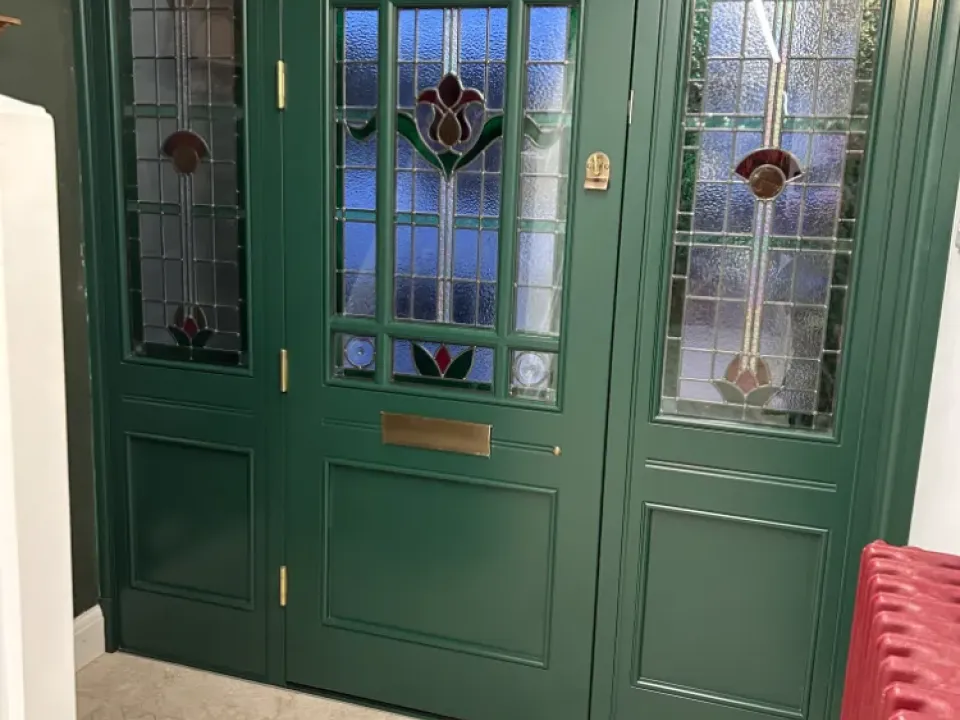
The biggest door design trends for 2026 are warmer, earthier colours, a move towards period-faithful detail with modern performance built in, and a growing focus on sustainable, long-lasting timber. Grey and black are giving way to berry tones, olive and sage greens, deep blues and terracotta, while natural oak continues to suit cottage and contemporary homes. Here's what that means for Nottingham homeowners choosing a new front door.
Trends come and go, so we'd always start with the house itself. The best door is one that suits the building and still looks right in twenty years. With that in mind, here's what's shaping timber doors designed and made in Nottingham this year.
Popular Timber Finishes and Colours This Year
Warm and earthy replaces grey and black
In May 2026, Ideal Home asked paint brand experts from Ronseal, Valspar, Dulux and Frenchic which front door colours are falling out of favour. Grey, black and bright red topped the list, with homeowners looking for more warmth and character. The colours replacing them were:
- Berry tones, including burgundy and deep reds and purples
- Greens, particularly olive and sage
- Deep blues, such as navy
- Terracotta and other earthy tones
The same palette appears elsewhere. Writing in Glass Times, coatings manufacturer RegaLead picked a dark burgundy, a deep inky blue and two traditional blue-greens as its 2026 colours, and recommended a semi-matte finish for a heritage look.
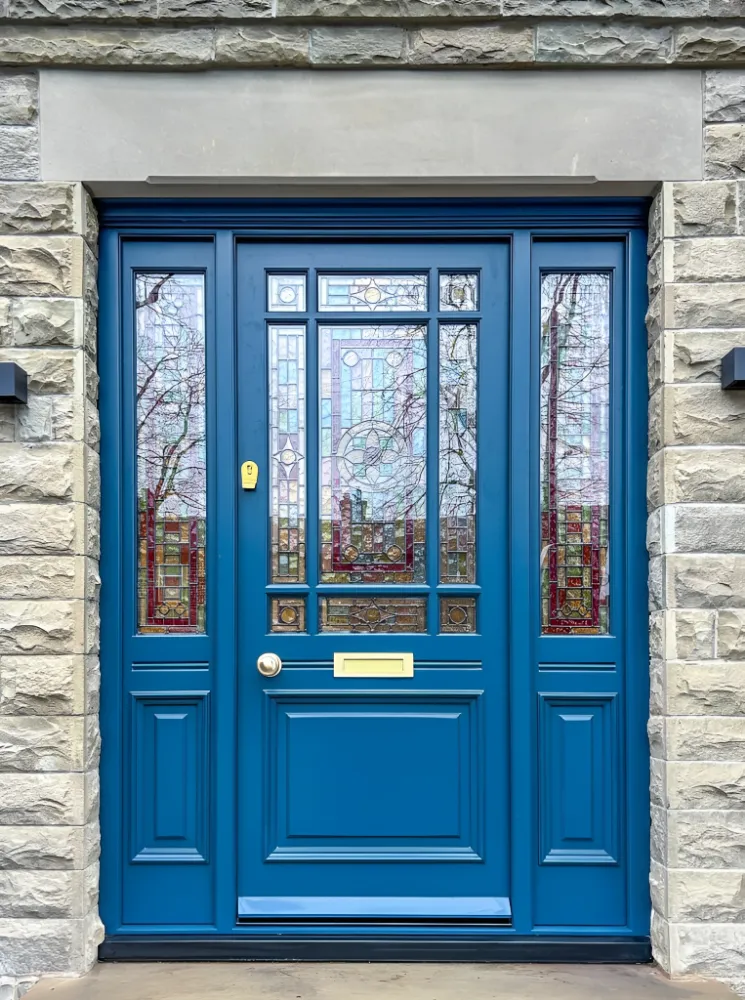
Heritage paint shades
Among Farrow & Ball shades, a June 2026 Ideal Home feature named warm reds such as Romesco and the deeper crimson Incarnadine, deep blues including Blue Maize and Hague Blue, and greens such as Green Smoke and Ball Green as popular front door choices. Deep blues and dark greens in particular have a long history on Victorian and Edwardian doors, which is why they look so at home on Nottingham's period streets, from The Park to Mapperley Park.
Lower sheen, natural timber
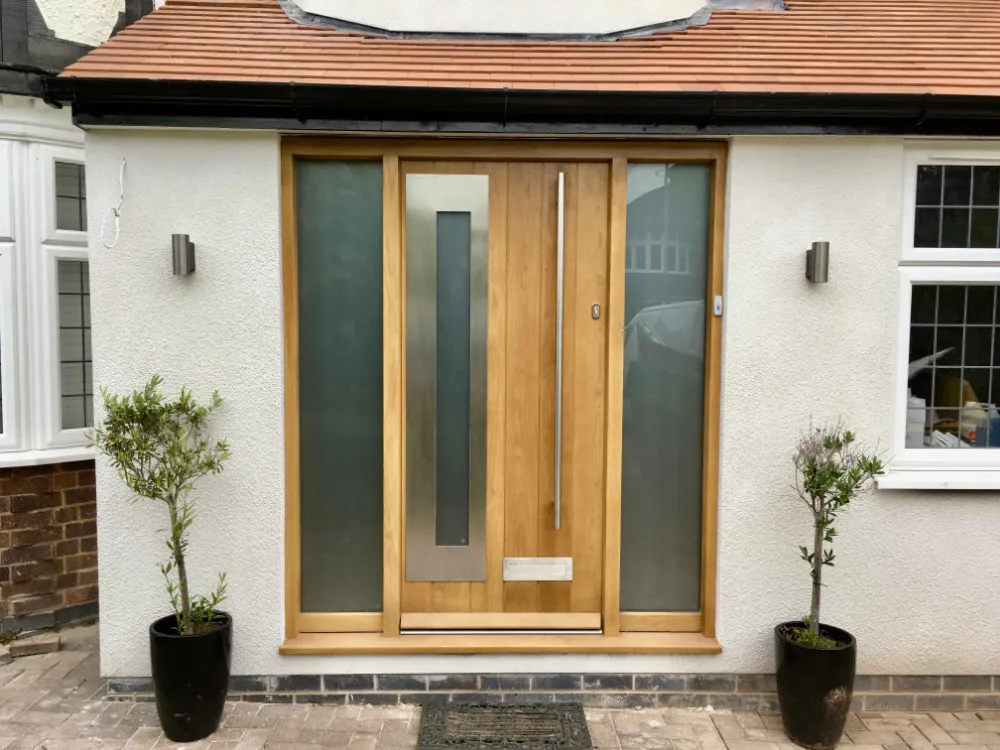
Softer, lower-sheen finishes such as eggshell and semi-matte are favoured for a traditional look over high gloss. For houses built to show timber, such as Arts and Crafts homes and cottages, natural oak with an oiled or clear finish fits naturally with the year's earthy palette. Our guide to oak vs softwood doors explains which timbers suit a natural finish.
Colour ideas by house type
A trend only works if it suits the building. As a starting point for Nottingham's main house types:
- Victorian terraces in Sherwood, Lenton and Forest Fields: deep greens, navy and berry reds sit well against red brick and look appropriate to the period.
- Edwardian villas in Mapperley Park and West Bridgford: deep blues and blue-greens complement larger glazed doors and stained glass.
- Georgian and Regency townhouses near the Lace Market and The Park: restrained, darker colours, often in a lower-sheen finish, suit the formal proportions.
- 1930s semis in Wollaton and Beeston: greens and terracotta-leaning shades suit the era's warmer palette; natural oak can work well too.
- Stone-built and cottage properties: natural oak, sage greens and soft blues complement stone and garden settings.
Before committing, look at the brick or stone, the window frames and the neighbours' doors in daylight. A colour that looks right in the tin can read very differently on a north-facing street, and darker shades absorb more heat on a sunny elevation, which makes a quality exterior paint system even more important.
Period-Faithful Design Meets Modern Performance
The goal for a period home is a door that looks authentically of its era without the draughts, rattles and weak locks that often come with tired originals. In practice, that means:
- Accurate proportions and mouldings matched to the era of the house, rather than generic "period-style" designs
- Restored or reproduced glass, including leaded and stained panels, fanlights with house numbers and sidelights
- Hidden performance: sealed glazing units, weather seals and quality locks built into a traditional-looking door
- Traditional ironmongery in brass or black iron, at the right scale for the door
Our guide to choosing a wooden door for a period property explains how to match a door to your home's era, and our comparison of timber vs uPVC doors explains why timber suits this approach.
Glass and ironmongery details
Stained and leaded glass continue to be the details that give a period door its personality, and they pair naturally with the deeper colours of 2026: a navy or green door makes coloured glass glow. Fanlights with painted or etched house numbers are a traditional touch that works on Victorian and Edwardian houses. For ironmongery, solid brass on dark paint and black iron on lighter colours and natural oak are classic combinations that won't date.
Sustainable and Certified Timber Choices
Sustainability is shaping how people choose doors, not only what colour they paint them. The most sustainable door is often the one that lasts longest. A solid timber door that can be repaired, stripped and refinished avoids the waste of replacing a whole door when something goes wrong.
- Ask where the timber comes from. Certification schemes such as FSC and PEFC let you check that timber comes from responsibly managed forests.
- Choose durability. Durable hardwoods and modified timbers such as Accoya, which the British Woodworking Federation lists as Class 1 durability, keep doors in service for longer.
- Keep what's worth keeping. Original glass, ironmongery and sound frames can often be reused in a new door.
- Use the right finish. A maintainable paint or stain system extends the life of the door.
For period homes, there's another sustainable option worth considering first: keeping the original door. Historic England advises that historic doors are seldom beyond repair and that repairing them usually costs less than replacement. Where an original survives in reasonable condition, repair, draught-proofing and a fresh finish may be the greenest and most authentic choice of all.
What About Internal Doors?
Inside the home, the same warmth carries through, with natural timber, panelled designs and decorative glass all popular. We've covered interiors separately in our round-up of top interior door trends.
How to Choose a Colour That Lasts
- Test it in place. Paint a sample board and look at it against the house at different times of day.
- Think about the street. On a terrace, a door that complements its neighbours often looks better than one that competes.
- Check for restrictions. Listed buildings and some conservation areas may have expectations about colour and finish; our guide to conservation area door rules explains how to check.
- Choose quality paint. A good exterior system for timber holds its colour and protects the door far longer than a cheap one.
Trends That Last
The trends worth following in 2026 are the ones that respect the house: authentic proportions, quality timber and a colour that suits the street. A Victorian door in a deep green or navy has looked right for more than a century, and it will still look right long after this year's palette has moved on. See our bespoke Victorian doors for inspiration.
Frequently Asked Questions
What front door colours are popular in 2026?
Paint experts quoted in 2026 point to a move away from grey, black and bright red towards berry and burgundy shades, olive and sage greens, deep navy blues and earthy terracotta. Deep reds, royal and inky blues, and dark smoky greens are among the most popular choices.
Are grey front doors going out of fashion?
According to paint brand experts interviewed in 2026, homeowners are moving away from grey towards colours with more warmth and character. A well-chosen grey can still work, but warmer, earthier tones are more in favour.
What paint finish is best for a period front door?
A finish with less sheen, such as eggshell or semi-matte, tends to suit period doors and gives a more traditional look than high gloss. Whatever the sheen, choose a quality exterior paint system made for timber.
Are natural wood front doors in style?
Natural timber finishes, especially oak, suit Arts and Crafts, cottage and contemporary homes and sit comfortably alongside the earthy colour palettes popular in 2026.
How can I make a period front door more sustainable?
Choose responsibly sourced timber, ask about certification such as FSC or PEFC, and prioritise a door that can be repaired and refinished rather than replaced. Keeping and restoring original glass and ironmongery also reduces waste.
Planning a New Front Door This Year?
Tell us about your house and the look you have in mind, and we'll design a door that suits both. Every quote is free and no-obligation. You can also browse doors we've made.
Looking to enhance your period home with bespoke craftsmanship? At Old English Doors, we specialise in creating custom wooden doors, windows, porches, and more - designed to reflect your home’s unique charm. Contact us today for a personalised quote and bring timeless elegance to your property.


