How to Choose the Right Wooden Door for a Period Property in Nottingham
To choose the right wooden door for a period property in Nottingham, start with the house: work out its era, look at surviving original doors on the street, and match the panel layout, glazing and proportions to what it was built with. Then choose a timber and finish that will cope with the weather, and check whether conservation rules apply. This guide walks through each step, with the details that make a period door look right.
Nottingham has an unusually rich mix of period housing, from Georgian townhouses near the Lace Market to Victorian terraces in Lenton and Sherwood, Edwardian villas in Mapperley Park and 1930s semis in Wollaton and Beeston. We make made-to-measure timber doors from our Nottingham workshop for all of them, and the same questions come up every time.
Step One: Work Out What Your House Was Built With
The single biggest mistake with period doors is choosing a style you like rather than the style the house was designed for. A heavily glazed Edwardian door on a plain Georgian frontage, or a Victorian four-panel door on a 1930s semi, always looks slightly wrong, even to people who can't say why.
Historic England suggests looking at old photographs and neighbouring houses of a similar age to find the right design. In practice that means:
- Your street. Terraces and estates were usually built with matching doors, so a surviving original a few doors down is the best evidence you'll find.
- Your doorway. The height and width of the opening, the shape of any fanlight, and the surround or porch all point to the original design.
- Old photos. Local archives, estate agents' old listings and even street-view history can show what was there before.
- The building itself. Brickwork, window styles and the date on the deeds help narrow down the era.
Matching Timber Doors to Victorian and Georgian Homes
Georgian (roughly 1714–1837)
Georgian front doors are about restraint and proportion. Expect six panels, often with the top two smaller, set in a symmetrical frontage, frequently with a semi-circular or rectangular fanlight above. Glass in the door itself is rare. Furniture is simple: a central knob or knocker and a letter plate. Our full guide to the Georgian front door goes into the history; for new doors, see our bespoke Georgian doors.
Victorian (1837–1901)
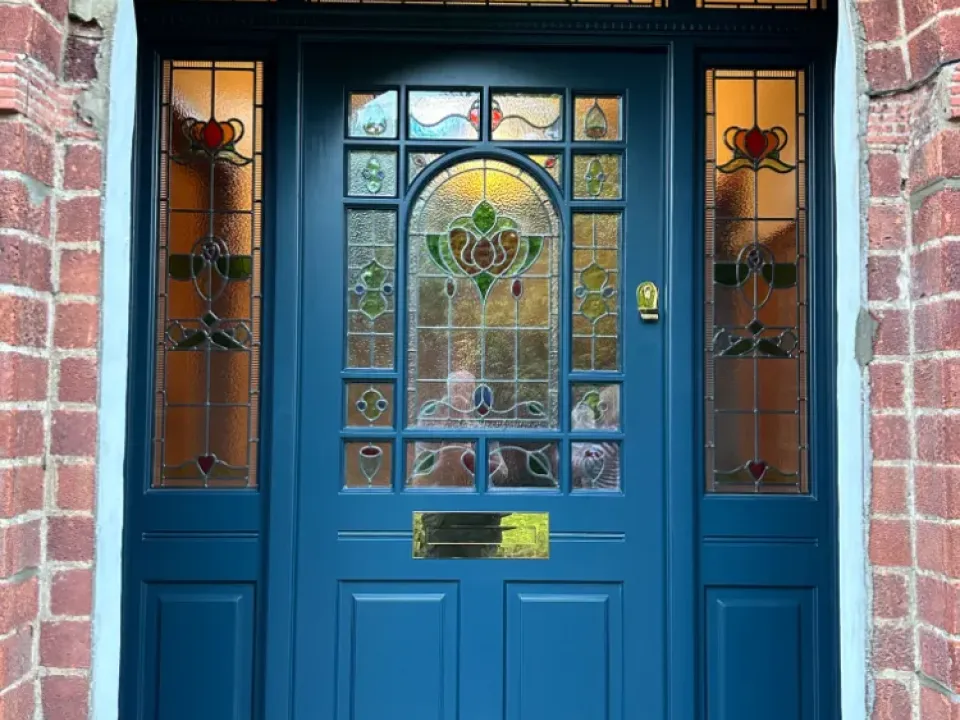
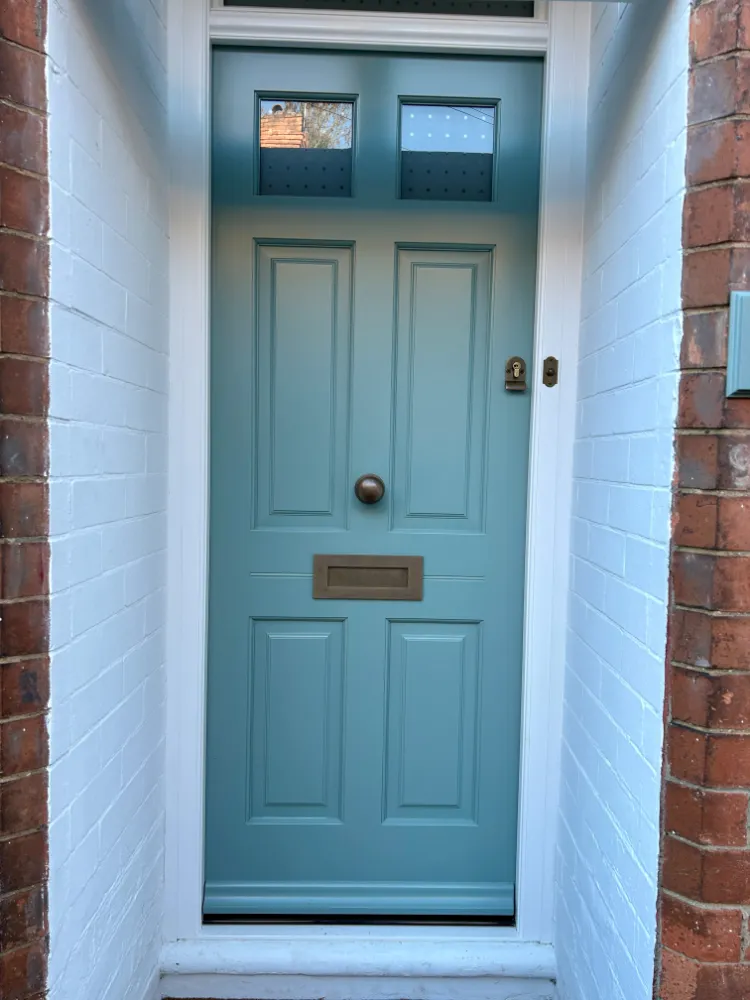
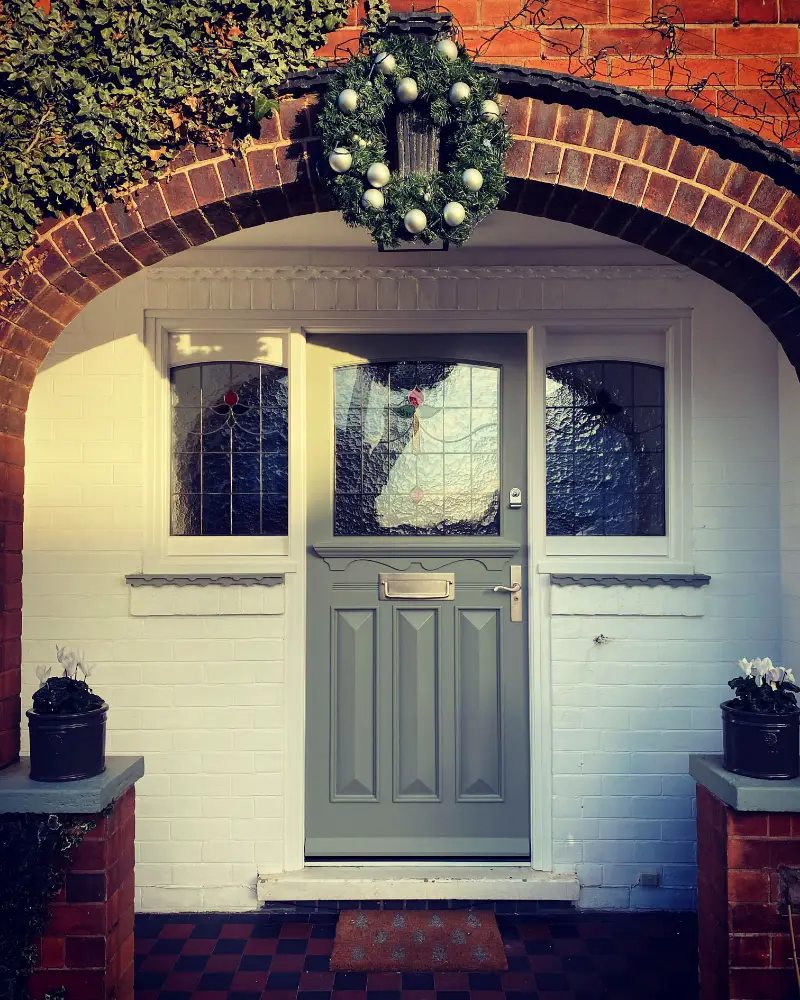
Victorian doors are where most Nottingham homeowners start, because so much of the city was built in this period. The classic is the four-panel door, often with the upper panels glazed in etched, coloured or leaded glass, under a rectangular fanlight frequently showing the house number. Mouldings get bolder through the period, and larger houses add sidelights and decorative glass. We've written about the history of doors in the Victorian era; our bespoke Victorian doors show how we build them today.
Edwardian and 1930s
Edwardian doors (1901–1910) are typically lighter and more glazed, with larger panes of leaded or stained glass, often in Art Nouveau patterns, and the houses tend to have generous porches. 1930s doors bring sunburst motifs, small leaded or stained panes and simpler panel arrangements. Both are common in Nottingham's suburbs; see our Edwardian doors for examples.
Choosing Between Oak, Pine and Hardwood for Character Properties
Many original Victorian doors were made in softwood, such as pine or deal, and painted. That's why so few survive in good condition where they weren't looked after. Today you can get the same look with far better durability.
- Oak is strong, heavy and naturally durable, with a distinctive grain. It suits doors that will be oiled or clear-finished to show the timber, and works well on Arts and Crafts and cottage-style properties.
- Other durable hardwoods are stable and take paint well, which makes them ideal for painted Georgian, Victorian and Edwardian doors where the timber is hidden but performance matters.
- Pine and other softwoods are lighter and cheaper, and were often used historically, but they need more care outdoors. They're more often suited to internal doors.
Every door we make is built in solid hardwood with traditional mortice and tenon joints. For an external door that has to cope with Nottingham's weather for decades, that's the specification we'd recommend whatever the finish.
Painted or natural finish?
Most period front doors were painted, often in deep greens, reds, blues and black, with the panels and mouldings picked out in a single colour. A natural oak finish is a good fit for Arts and Crafts and rural properties, but on a Georgian or Victorian terrace, paint is usually the more faithful choice.
Glass, Ironmongery and the Details That Make It Right
Once the style is right, the details carry it. Leaded and stained glass should match the period: geometric Victorian patterns, flowing Edwardian designs, or 1930s sunbursts. If your current door has original glass in good condition, it can often be reused in a new door. Our stained glass work covers both reproduction and new designs.
Ironmongery matters just as much. Brass or black iron in the right place and at the right scale makes a door look authentic; oversized modern handles undo it instantly. Keep the original knocker, letter plate and knob wherever you can.
Don't Forget the Internal Doors
Period character doesn't stop at the front door. Historic England notes that Georgian and Victorian panelled internal doors are often key features of a room's design, and that simple boarded doors in older cottages shouldn't be swapped for panelled ones. Many period houses have lost their original internal doors to flat, flush replacements over the years, and reinstating panelled doors in the right style is one of the most effective ways to bring a period interior back to life.
If a few originals survive, use them as the pattern for the rest so the whole house reads as one. Matching panel layout, moulding profile and door height matters more than exact timber species, because internal doors are usually painted.
Working with Conservation Officers on Door Specifications
If your home is listed or in one of Nottingham's 33 conservation areas, the council may have a say in your door. Most houses in a conservation area can replace a door with one of similar appearance without planning permission, but listed buildings and properties covered by an Article 4 direction need more care. Our guide to conservation area door rules in Nottingham explains when consent is needed and how to check.
Where consent is needed, the conversation with the conservation officer goes much more smoothly when the specification is backed by evidence:
- Measured drawings showing panel layout, mouldings and glazing
- Photographs of the existing door and of originals on the street
- A clear statement of timber, glass, ironmongery and finish
- An explanation of how the design reflects the building's history
This is how we approach every heritage project: the design comes from the building, and the drawings are prepared to support consent where it's required. Our period doors page shows more of that work.
Frequently Asked Questions
How do I know what style of door my period house should have?
Start with the age of the house, then look for evidence: surviving original doors on your street, old photographs, and the shape of your own doorway, fanlight and surround. A joiner experienced in period work can usually date the property and suggest the correct panel layout from those clues.
What timber is best for a period front door?
A durable, stable hardwood is the safest choice for an external door, because it resists weather and movement. Many original Victorian doors were made in softwood and painted, so a painted hardwood door gives the right look with better durability. Oak is ideal where you want a natural, visible grain.
Should a Victorian front door be painted or varnished?
Most Victorian front doors were painted, often in deep colours such as greens, reds, blues and black. A clear-finished hardwood door can look striking, but a painted finish is usually more faithful to the period.
Can I get a new door that matches my neighbours' originals?
Yes. Matching surviving originals on the same street is one of the best ways to get a door right, especially in a terrace. We can measure and record an original as the basis for your design, with the owner's permission.
Do I need permission to replace a door on a period property in Nottingham?
Usually not for a house that isn't listed or covered by an Article 4 direction, provided the new door is similar in appearance. Listed buildings and some conservation areas are different, so check with the council first.
Let's Find the Right Door for Your House
Tell us about your property and we'll help you work out what it was built with and what will suit it now. Every quote is free and no-obligation. You can also browse period doors we've made.
Looking to enhance your period home with bespoke craftsmanship? At Old English Doors, we specialise in creating custom wooden doors, windows, porches, and more - designed to reflect your home’s unique charm. Contact us today for a personalised quote and bring timeless elegance to your property.