7 Costly Mistakes to Avoid When Buying Wooden Doors in Nottingham
The costliest mistakes when buying a wooden door in Nottingham are ordering a standard size for a period opening, skipping proper sealing and finishing, and choosing on price rather than craftsmanship. Each one leads to a door that sticks, warps, leaks or simply looks wrong, and fixing it usually costs more than getting it right first time. Here are seven mistakes we see most often, and how to avoid them.
A good door should last for decades, so it's worth a little care at the start. If you're working with a local Nottingham joiner, these are the questions to ask before you sign off on anything.
1. Ordering Standard Sizes Instead of Bespoke Measurements
Standard doors are made to fixed sizes. Many of Nottingham's older homes, from Victorian terraces in Sherwood to Edwardian villas in Mapperley Park, have openings that are taller, wider or simply out of square after a century of settlement. A standard door then has to be trimmed to fit.
Historic England warns against cutting a door down in size, because it weakens the door and may not look right. Trimming removes timber from the stiles and rails that hold the door together, and it throws out the panel proportions. The result is often a door that sags, leaks around the edges and never quite closes properly. A door made to measure for the opening avoids all of that.
2. Skipping Proper Timber Treatment and Sealing
Timber moves as it takes up and loses moisture. If a door isn't sealed evenly, one face absorbs more moisture than the other and the door can bow or twist. The edges that are hardest to see, the top and bottom, are the ones most often missed, and the bottom edge takes the brunt of rain and splashback.
- Make sure every face and edge is sealed, including any edges trimmed during fitting
- Use a finish system designed for exterior timber, such as a microporous paint or stain
- Don't leave a primed door unfinished for months after fitting
- Plan to check the finish every year and refresh it every few years, especially on south- and west-facing doors
Softwood doors depend on this even more than hardwood, because they rely on treatment and paint for their durability. Our comparison of oak and softwood doors explains why.
3. Choosing Price Over Joinery Craftsmanship
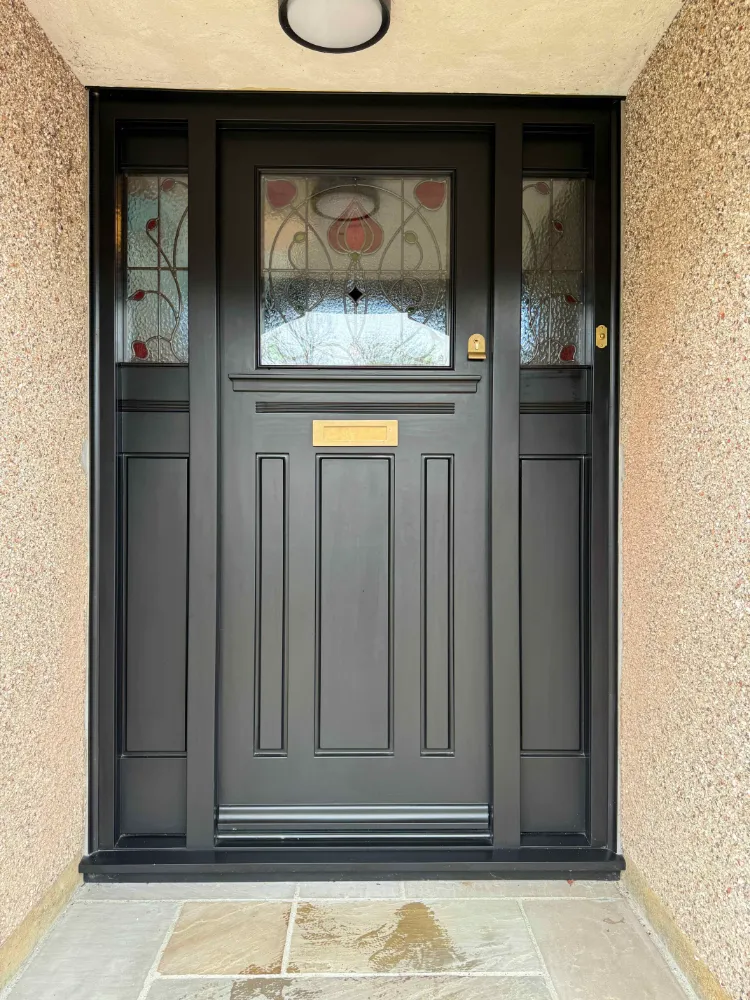
Two doors can look alike in a photograph and be completely different underneath. Cheaper doors are often dowel-jointed, made from finger-jointed or fast-grown timber, or built around a veneered core. A properly made door uses solid, well-seasoned timber and mortice and tenon joints that hold their shape for decades.
Ask how the door is made, what timber is used, and whether it's solid or engineered. The cheapest quote can easily become the most expensive door once repairs and early replacement are counted. Look at the details too: crisp, consistent mouldings, tight joints with no gaps, panels that sit evenly in their grooves and a smooth, even finish are all signs of a door made with care. If you can, see a finished door from the same maker before ordering, or look through their past work. Our guide to what a bespoke wooden door costs explains where the money goes.
4. Picking a Style That Doesn't Suit the House
A door can be beautifully made and still be wrong for the building. A heavily glazed Edwardian design on a plain Georgian frontage, or a modern design on a Victorian terrace, sticks out on the street. The same goes for details: oversized modern handles on a Victorian door, or the wrong glass pattern for the era, undo good joinery instantly. Look at surviving original doors nearby and the shape of your doorway and fanlight before choosing. Our guide to choosing a wooden door for a period property walks through it step by step.
5. Forgetting the Frame, Threshold and Surround
A new door hung in a rotten or distorted frame won't seal properly, however good the door is. Check the frame's condition, particularly at the foot where rot usually starts, and confirm whether the quote includes a new frame, sill and threshold. In older houses, original surrounds, fanlights and mouldings are worth keeping wherever they're sound.
The threshold deserves particular attention. It's where water collects and where draughts get in, and on many older Nottingham houses it has been patched or replaced over the years with whatever was to hand. A properly detailed sill and threshold, with a weatherboard on the door to throw water clear, does more for a dry, draught-free hallway than almost anything else.
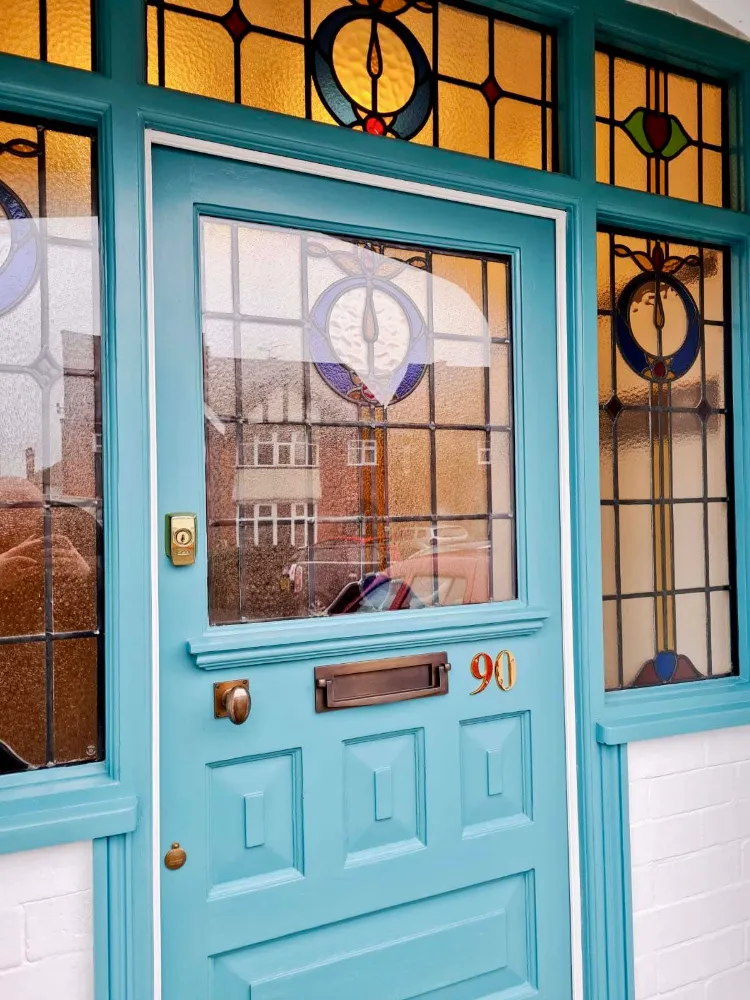
6. Not Checking Planning and Conservation Rules
Most houses can change a front door without planning permission if the new door is similar in appearance. Listed buildings, and homes covered by an Article 4 direction, are different. Ordering a door first and checking later can mean a costly refusal. Our guide to conservation area door rules in Nottingham explains how to check.
7. Comparing Quotes That Don't Match
A single figure tells you very little. One quote may include the frame, glazing, ironmongery, finishing and fitting; another may be for the door alone. Before comparing prices, make sure each quote specifies the same timber and construction, glazing, ironmongery and locks, finish, frame and threshold, fitting and disposal of the old door, and VAT. Like-for-like is the only fair comparison.
It's also worth asking who will do the work. A quote from a company that subcontracts the making or the fitting can look competitive, but it adds hand-offs where measurements and details get lost. Knowing that the people who measure your doorway are the people who make and hang the door gives you one point of responsibility if anything needs putting right.
A Quick Checklist Before You Order
- Has the opening been measured in person, top, middle and bottom, by the people making the door?
- Is the door solid timber, and which species?
- Are the joints mortice and tenon?
- Will every face and edge be sealed, and what finish system is being used?
- Does the design match the age and style of the house?
- Is the frame sound, or is a new frame, sill and threshold included?
- Have you checked whether the property is listed or covered by an Article 4 direction?
- Does the quote cover glazing, ironmongery, finishing, fitting and disposal, and is VAT included?
If you can answer yes to all of these, you're very unlikely to end up with a door you regret.
Getting It Right First Time
Most of these mistakes come from treating a door as an off-the-shelf product rather than a piece of joinery made for one opening. When the same team measures, designs, makes and fits the door, there's far less room for any of them to creep in. Our handcrafted external wooden doors are made that way.
Frequently Asked Questions
What should I look for when buying a wooden front door?
Check that it's made to measure for your opening, built from durable solid timber with mortice and tenon joints, properly sealed and finished on every face, and designed to suit the age of your house. Make sure the quote covers the frame, glazing, ironmongery, finish and fitting.
Is it worth buying a cheaper standard-size wooden door?
For a modern house with a standard opening it can be. In an older house, standard doors usually have to be cut down to fit, which weakens them and spoils the proportions. A made-to-measure door avoids that problem.
Why do wooden doors warp?
Usually because the timber wasn't sealed on every face, especially the top and bottom edges, so it takes up moisture unevenly. Poor-quality or fast-grown timber and weak joints make warping more likely.
Do I need permission to change my front door in Nottingham?
Most houses don't, as long as the new door is similar in appearance. Listed buildings and homes covered by an Article 4 direction are different, so check with the council before ordering.
How do I compare quotes for wooden doors?
Make sure each quote specifies the same timber, construction, glazing, ironmongery, finish, frame and fitting. A lower price often means something has been left out.
Avoid the Costly Mistakes
Tell us about your door and your house, and we'll measure, design and make it properly from the start. Every quote is free and no-obligation. You can also see doors we've made.
Looking to enhance your period home with bespoke craftsmanship? At Old English Doors, we specialise in creating custom wooden doors, windows, porches, and more - designed to reflect your home’s unique charm. Contact us today for a personalised quote and bring timeless elegance to your property.