How to Reinforce a Period Wooden Door Without Losing Its Character
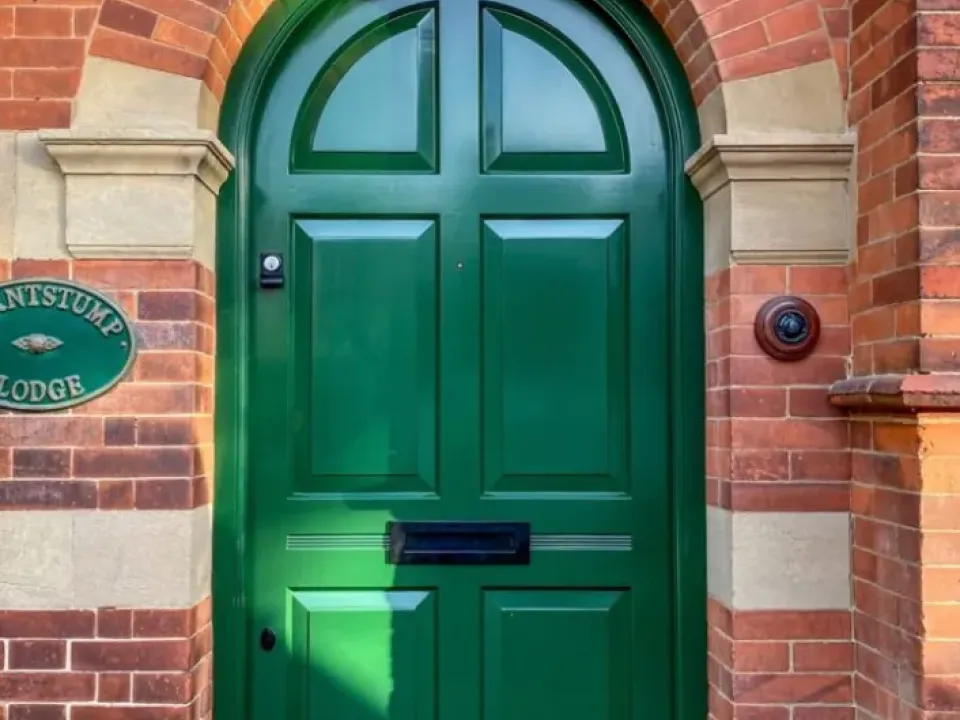
You can make a period wooden door far more secure without spoiling it by upgrading the lock, strengthening the frame and hinges, protecting the letterbox and replacing vulnerable glass. Most of these upgrades are hidden inside the door or frame, so the character of the original survives. This guide explains where older timber doors are weakest and which reinforcements work best on period properties in Nottingham.
We've written separately about why well-made wooden entrance doors are so strong. This guide is about the practical next step: taking an existing period door, or a new one in a period style, and making it as secure as it is handsome. It's something our Nottingham joinery team thinks about on every door we design.
Common Weak Points in Older Timber Doors
A solid timber door is rarely the weak part of the doorway. Burglars look for the easiest route, and on older doors that's usually one of these:
- An old or low-grade lock. Many period doors still have a simple rim lock or a mortice lock with few levers, which offers little resistance.
- The frame. A rotten or weak frame, especially around the strike plate, can split when the door is forced. Police advice is to check the frame is sturdy and replace it if it's rotten.
- The letterbox. Thieves can reach or fish through a letterbox to open a latch or grab keys.
- Glass panels. Stained or leaded glass near the lock can be broken to reach the handle or latch inside.
- Hinges. Where a door opens outwards, exposed hinge pins can be attacked.
- Thin or damaged panels. Old panels that have split or shrunk can sometimes be pushed through.
Many period doors have also been altered over the years, with extra locks added, letterboxes moved or panels replaced. Each alteration can leave old holes and weakened timber around the lock area, so it's worth having the door checked over before adding anything new.
Modern Locking Systems That Suit Period Doors
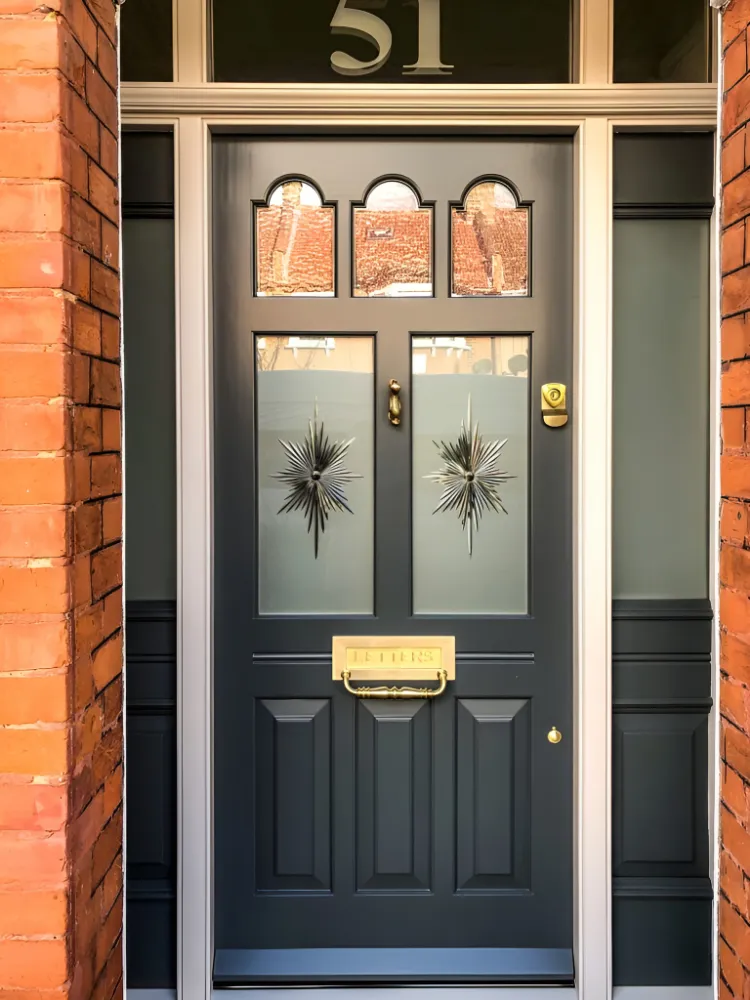
West Yorkshire Police advise fitting wooden doors with a 5-lever mortice lock tested to BS 3621, noting that this is usually a requirement for insurance policies. Because a mortice lock is housed inside the door, it suits period doors well: from outside, all you see is a keyhole and escutcheon that can match your other door furniture.
- BS 3621 mortice sashlock or deadlock. The main lock, concealed in the door's thickness.
- Deadlocking nightlatch. A rim-mounted latch that can be deadlocked, giving convenience by day; choose one tested to an appropriate standard.
- Multi-point locking. On new bespoke doors, multi-point systems lock at several points along the edge. We've explained how a 3-point locking system for wooden doors works.
If you're replacing several locks, ask about having them keyed alike so one key opens the front and back doors. It's a small convenience that makes people more likely to lock every door every time. And when you move into a house with an older door, changing or re-keying the locks is one of the simplest security improvements you can make, because you can't know how many keys are in circulation.
The visible ironmongery can stay entirely traditional: brass or black iron knobs, knockers and escutcheons in the right style for the house. Our guide to properly accenting your doors with door furniture covers how to choose it.
Reinforcement Options That Preserve Original Character
Strengthen the frame
A good lock is only as strong as the frame it locks into. Reinforcing the frame around the strike plate, fixing it securely to the masonry, and replacing rotten sections with matching timber all make forced entry much harder, and none of it is visible once the door is painted.
Secure the hinge side
Hinge bolts fit into the hinge edge of the door and engage with the frame when it closes, so the door can't be levered off its hinges. Police advice is to fit hinge bolts or security hinges where a door opens outwards, and to use long, strong screws. They're invisible when the door is shut.
Protect the letterbox
A letterbox guard fitted on the inside stops anyone reaching through to the lock or latch. West Yorkshire Police recommend a door-mounted security deflector made to TS008. From outside, your original letter plate looks exactly the same.
Upgrade the glass, keep the look
Police advice is to use laminated security glass rated to BS EN 356 P1A or better in vulnerable doors. On a period door with original stained or leaded panels, the glass can often stay: a laminated pane can be fitted behind it, or the lock repositioned away from the glass. Where glass is being renewed, our stained glass work can reproduce the original design.
See who's there
A door viewer is a small, discreet addition if you have no window to see callers. Chains are useful for checking callers, but police advice warns they won't help secure a locked door against burglary.
Don't Forget Back and Side Doors
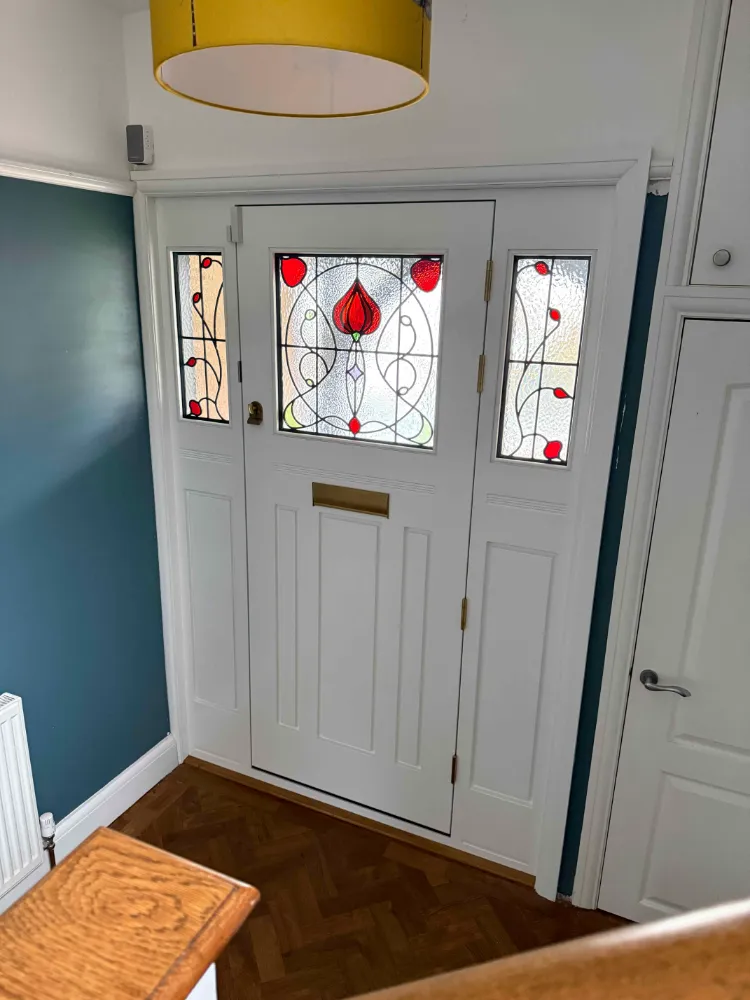
Front doors get the attention, but back and side doors are often less visible from the street and more attractive to intruders. In many Nottingham terraces the back door opens onto a yard or a shared alley, out of sight of neighbours. Apply the same principles there: a quality lock, a sound frame, secure hinges and laminated glass in any panels near the lock. Because these doors are usually simpler in design, reinforcing them rarely affects the character of the house.
A Security Checklist for Period Doors
- Main lock: 5-lever mortice lock tested to BS 3621
- Frame: sound timber, securely fixed, reinforced around the strike plate
- Hinges: strong fixings, with hinge bolts where appropriate
- Letterbox: internal guard or deflector made to TS008
- Glass: laminated security glass in vulnerable panels, or a laminated pane behind original glass
- Callers: a door viewer or window to see who's there
- Habits: lock the door even when you're at home, and keep keys away from the door and letterbox
Working through this list usually reveals one or two weak points that make the biggest difference. Fixing those first gives the best return for the least change to the door.
When to Repair, Reinforce or Replace
If the door itself is sound, reinforcement is usually the best route, and it keeps the original. If the door is badly decayed, split or has been cut down to fit, a new door made to the same design can be built with security designed in from the start: thicker sections, a quality lock and laminated glass, without changing the look. Our guide to front doors vs internal doors explains why external doors need that extra strength.
If your home is listed or in a conservation area, check before altering an original door. Our guide to conservation area door rules in Nottingham explains when consent may be needed.
Frequently Asked Questions
What lock should I fit to an old wooden front door?
Police advice for wooden doors is a 5-lever mortice lock tested to BS 3621, which is usually what insurers require. It sits inside the door, so it's discreet on a period door and can be paired with traditional handles and escutcheons.
Can I make a period door secure without replacing it?
Often, yes. Upgrading the lock, reinforcing the frame, adding hinge bolts, fitting a letterbox guard and replacing vulnerable glass with laminated glass can make a big difference without changing how the door looks.
Is stained glass in a front door a security risk?
Any glass near the lock can be broken to reach through. Police advice is to use laminated security glass in vulnerable doors. Original leaded panels can often be kept by adding a laminated pane behind them or by repositioning the lock.
Do I need permission to add locks to a listed building's door?
Possibly. Listed building consent is needed for most work to a listed building, and fitting new locks, bolts or glass to an original door can count. Check with the council before starting.
Are door chains a good security measure?
They're useful for checking callers, but police advice warns that a chain won't help secure a locked door against burglary. Use one alongside a proper lock and a door viewer or window to see who's there.
Make Your Period Door More Secure
Tell us about your door and we'll recommend the reinforcements that suit it, or design a new door with security built in. Every quote is free and no-obligation. You can also see period doors we've made.
Looking to enhance your period home with bespoke craftsmanship? At Old English Doors, we specialise in creating custom wooden doors, windows, porches, and more - designed to reflect your home’s unique charm. Contact us today for a personalised quote and bring timeless elegance to your property.


